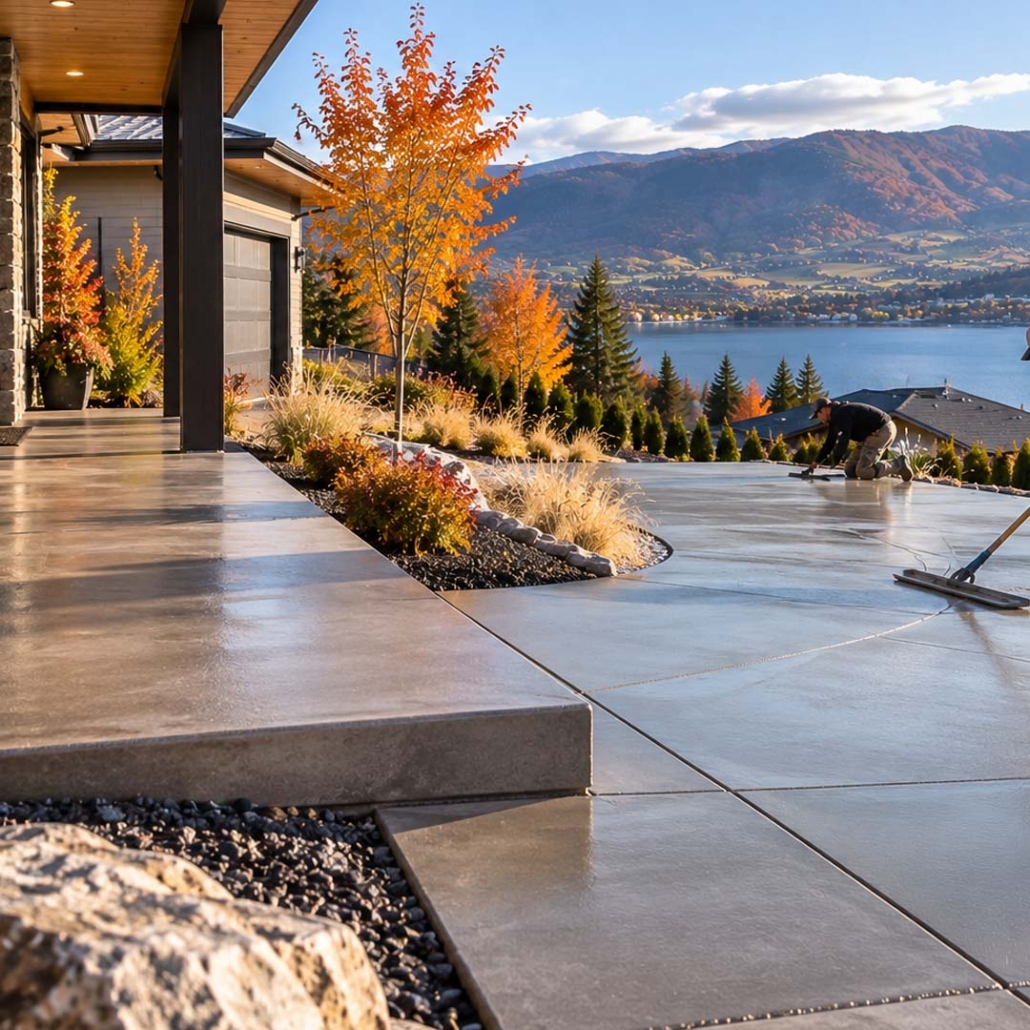
Summer may be the busiest season for outdoor construction, but the arrival of fall doesn’t necessarily mean concrete season is over.
September and early fall can still provide good opportunities to complete concrete projects throughout Kelowna and the Okanagan. Driveways, patios, walkways and other flatwork may still be possible depending on temperatures, weather conditions and the amount of site preparation required.
The key is understanding that cooler weather changes how concrete behaves and knowing when conditions are still appropriate for the work.
Can You Pour Concrete in the Fall?
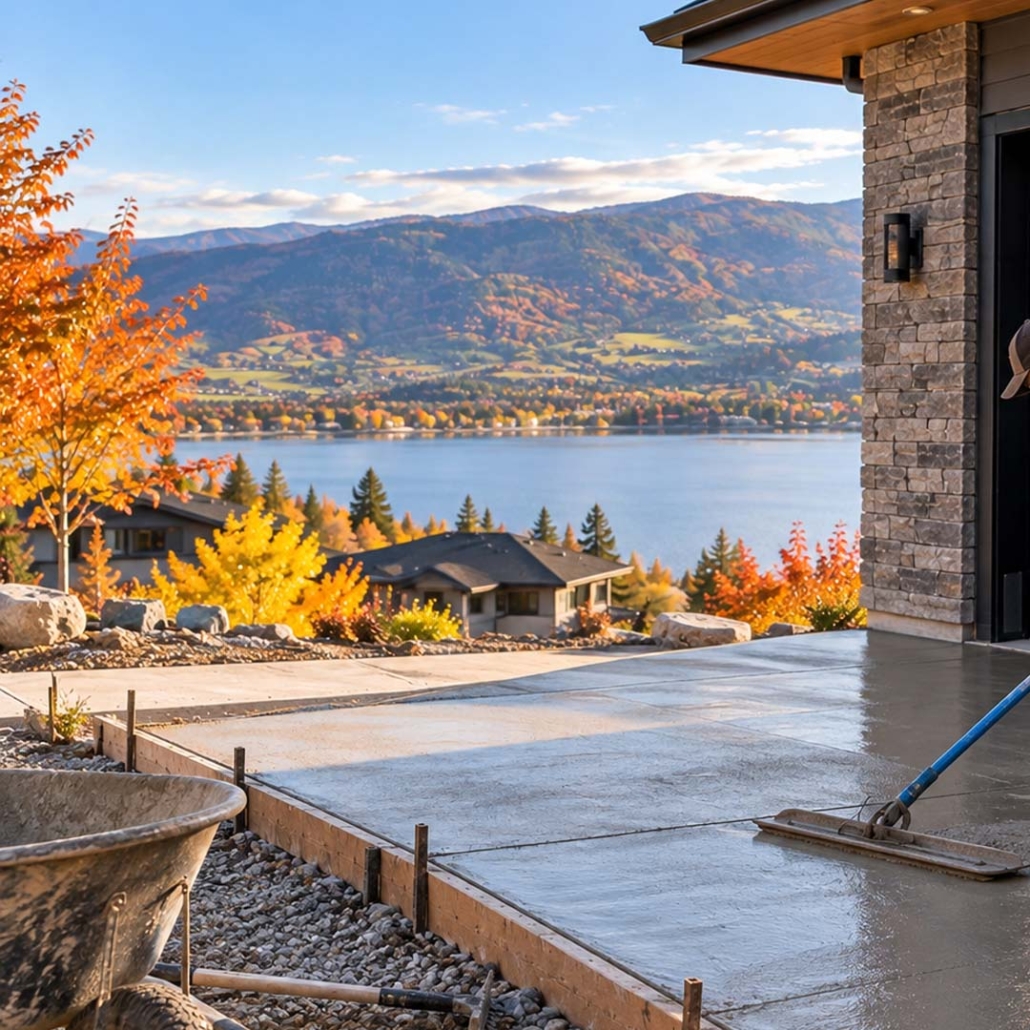
Yes. Concrete can be poured during cooler weather, but temperature becomes increasingly important as we move toward winter.
Concrete doesn’t simply “dry.” It cures through a chemical reaction involving cement and water. Colder temperatures slow that process, while freezing conditions can cause problems if fresh concrete isn’t properly protected.
That’s why fall concrete work needs to be scheduled around actual conditions rather than a fixed date on the calendar.
If you’re considering a project, Preparing Your Property for Concrete Work in the Okanagan Climate explains some of the work that needs to happen before the concrete truck arrives.
What Concrete Projects Can Still Be Completed?
Depending on the weather and site conditions, fall can still be suitable for many residential concrete projects.
These may include:
- Patios
- Walkways and sidewalks
- Driveway sections
- Concrete pads
- Steps
- Replacement of deteriorated concrete
- Concrete incorporated into larger landscape projects
The size and complexity of the job matter. A straightforward walkway is very different from a large project requiring significant excavation, drainage changes and site preparation.
Don’t Rush the Site Preparation
Trying to beat winter shouldn’t mean cutting corners underneath the concrete.
Excavation, grading and base preparation are critical regardless of the time of year.
A properly prepared base helps provide consistent support beneath the slab. Drainage also needs to be considered so water doesn’t collect where it can contribute to settlement or freeze-thaw problems later.
This is particularly important in the Okanagan, where seasonal temperature changes can be hard on poorly constructed concrete.
If you’re wondering why some concrete develops problems much sooner than expected, read What Causes Concrete Cracks in the Okanagan Climate?
Fall Is a Good Time to Deal With Old Concrete
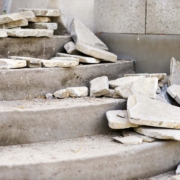
If an existing patio, walkway or driveway is badly deteriorated, fall can also be a useful time to remove it and assess what’s happening underneath.
Cracking or settlement may point to problems with the base, drainage or grading rather than simply the concrete itself.
Replacing the surface without addressing the underlying problem can lead to the same issues appearing again.
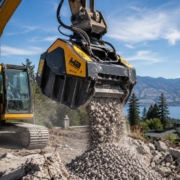
This year, Fuller’s has also invested in specialized crushing equipment that will expand what we can do with suitable concrete and rock directly at certain job sites. Read New Mobile Concrete Crushing Service Coming to the Okanagan to learn more about this new capability.
Think About Drainage Before Snow Arrives
Fall is an excellent time to pay attention to how water moves around your property.
When it rains, look at your existing concrete.
Does water run toward the house? Does it pool along the edge of the driveway? Are there low areas on the patio? Has soil settled beside a slab?
These aren’t just cosmetic issues.
Water that repeatedly collects in the wrong location can contribute to erosion, settlement and problems during freeze-thaw cycles.
Sometimes the solution involves the concrete itself. Other times, surrounding grading, drainage or retaining wall construction needs to be considered as part of the project.
What If It’s Too Late to Pour?
If temperatures or weather conditions make finishing the entire project impractical, that doesn’t necessarily mean nothing can be done until spring.
Depending on the site, there may still be value in assessing the property and determining what excavation, demolition, drainage or other preparation will eventually be required.
For larger outdoor renovations, this also gives you time to determine the correct order of work.
If the project includes landscaping, retaining walls and concrete, coordinating those components before construction begins can prevent finished areas from having to be disturbed again later.
Protect the Concrete You Already Have
Even if you aren’t installing new concrete this fall, existing surfaces deserve some attention before winter.
Clean away leaves and debris, check drainage and inspect the surface for deterioration. Pay particular attention to areas where water consistently collects.
Our Summer Concrete Maintenance Tips for Okanagan Homeowners includes maintenance information that remains useful when inspecting your concrete heading into fall.
Small cracks don’t automatically mean a slab needs to be replaced, but changes should be monitored so you can identify problems that are getting progressively worse.
Start Thinking About Spring Projects Now
If the project can’t happen this fall, you don’t need to wait until spring to start thinking about it.
Fall is a good time to assess existing concrete, identify drainage or grading problems and determine whether demolition or excavation will be required.
That gives you a much clearer idea of the project’s scope before the busy outdoor construction season returns.
Whether you’re considering a patio, walkway, driveway, concrete pad or a larger outdoor renovation, contact Fuller’s Concrete for an estimate and we can take a look at the property.
Frequently Asked Questions
How late in the year can concrete be poured in Kelowna?
There isn’t one calendar date that determines the end of concrete season. Temperature, forecast conditions, ground conditions and the particular project all matter. Cooler-weather concrete work may also require additional precautions.
Can concrete cure in cold weather?
Concrete can cure in cooler temperatures, but the curing process slows as temperatures fall. Fresh concrete must also be protected from freezing. The contractor should determine whether conditions are appropriate for the pour and what protection is required.
Should cracked concrete be replaced before winter?
Not necessarily. The severity and cause of the cracking should be considered first. Some cracks are primarily cosmetic, while significant settlement, movement or deterioration may indicate a larger problem.
Is fall a good time to replace a concrete patio?
It can be. If temperatures and site conditions are appropriate, patios and other concrete flatwork may still be completed during fall.
Can Fuller’s remove old concrete before installing new concrete?
Yes, depending on the project. Fuller’s provides excavation and site preparation, and its new crushing equipment will provide another option for processing suitable concrete and rock on certain job sites.