Summer may be the busiest season for outdoor construction, but the arrival of fall doesn’t necessarily mean concrete season is over.

September and early fall can still provide good opportunities to complete concrete projects throughout Kelowna and the Okanagan. Driveways, patios, walkways and other flatwork may still be possible depending on temperatures, weather conditions and the amount of site preparation required.

The key is understanding that cooler weather changes how concrete behaves and knowing when conditions are still appropriate for the work.

Can You Pour Concrete in the Fall?
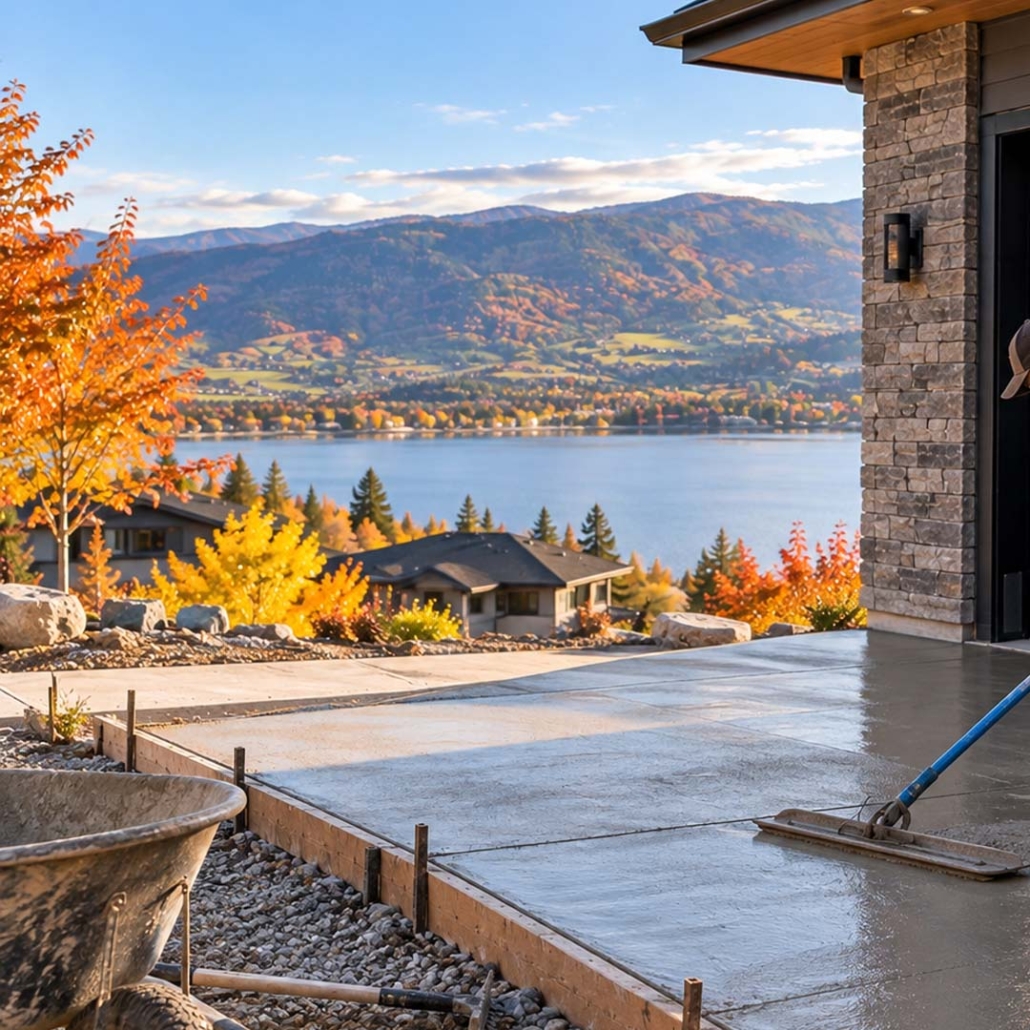
concrete finishing in kelowna

Yes. Concrete can be poured during cooler weather, but temperature becomes increasingly important as we move toward winter.

Concrete doesn’t simply “dry.” It cures through a chemical reaction involving cement and water. Colder temperatures slow that process, while freezing conditions can cause problems if fresh concrete isn’t properly protected.

That’s why fall concrete work needs to be scheduled around actual conditions rather than a fixed date on the calendar.

If you’re considering a project, Preparing Your Property for Concrete Work in the Okanagan Climate explains some of the work that needs to happen before the concrete truck arrives.

What Concrete Projects Can Still Be Completed?

Depending on the weather and site conditions, fall can still be suitable for many residential concrete projects.

These may include:

  • Patios
  • Walkways and sidewalks
  • Driveway sections
  • Concrete pads
  • Steps
  • Replacement of deteriorated concrete
  • Concrete incorporated into larger landscape projects

The size and complexity of the job matter. A straightforward walkway is very different from a large project requiring significant excavation, drainage changes and site preparation.

Don’t Rush the Site Preparation

Trying to beat winter shouldn’t mean cutting corners underneath the concrete.

Excavation, grading and base preparation are critical regardless of the time of year.

A properly prepared base helps provide consistent support beneath the slab. Drainage also needs to be considered so water doesn’t collect where it can contribute to settlement or freeze-thaw problems later.

This is particularly important in the Okanagan, where seasonal temperature changes can be hard on poorly constructed concrete.

If you’re wondering why some concrete develops problems much sooner than expected, read What Causes Concrete Cracks in the Okanagan Climate?

Fall Is a Good Time to Deal With Old Concrete

If an existing patio, walkway or driveway is badly deteriorated, fall can also be a useful time to remove it and assess what’s happening underneath.

Cracking or settlement may point to problems with the base, drainage or grading rather than simply the concrete itself.

Replacing the surface without addressing the underlying problem can lead to the same issues appearing again.

This year, Fuller’s has also invested in specialized crushing equipment that will expand what we can do with suitable concrete and rock directly at certain job sites. Read New Mobile Concrete Crushing Service Coming to the Okanagan to learn more about this new capability.

Think About Drainage Before Snow Arrives

Fall is an excellent time to pay attention to how water moves around your property.

When it rains, look at your existing concrete.

Does water run toward the house? Does it pool along the edge of the driveway? Are there low areas on the patio? Has soil settled beside a slab?

These aren’t just cosmetic issues.

Water that repeatedly collects in the wrong location can contribute to erosion, settlement and problems during freeze-thaw cycles.

Sometimes the solution involves the concrete itself. Other times, surrounding grading, drainage or retaining wall construction needs to be considered as part of the project.

What If It’s Too Late to Pour?

If temperatures or weather conditions make finishing the entire project impractical, that doesn’t necessarily mean nothing can be done until spring.

Depending on the site, there may still be value in assessing the property and determining what excavation, demolition, drainage or other preparation will eventually be required.

For larger outdoor renovations, this also gives you time to determine the correct order of work.

If the project includes landscaping, retaining walls and concrete, coordinating those components before construction begins can prevent finished areas from having to be disturbed again later.

Protect the Concrete You Already Have

Even if you aren’t installing new concrete this fall, existing surfaces deserve some attention before winter.

Clean away leaves and debris, check drainage and inspect the surface for deterioration. Pay particular attention to areas where water consistently collects.

Our Summer Concrete Maintenance Tips for Okanagan Homeowners includes maintenance information that remains useful when inspecting your concrete heading into fall.

Small cracks don’t automatically mean a slab needs to be replaced, but changes should be monitored so you can identify problems that are getting progressively worse.

Start Thinking About Spring Projects Now

If the project can’t happen this fall, you don’t need to wait until spring to start thinking about it.

Fall is a good time to assess existing concrete, identify drainage or grading problems and determine whether demolition or excavation will be required.

That gives you a much clearer idea of the project’s scope before the busy outdoor construction season returns.

Whether you’re considering a patio, walkway, driveway, concrete pad or a larger outdoor renovation, contact Fuller’s Concrete for an estimate and we can take a look at the property.

Frequently Asked Questions

How late in the year can concrete be poured in Kelowna?

There isn’t one calendar date that determines the end of concrete season. Temperature, forecast conditions, ground conditions and the particular project all matter. Cooler-weather concrete work may also require additional precautions.

Can concrete cure in cold weather?

Concrete can cure in cooler temperatures, but the curing process slows as temperatures fall. Fresh concrete must also be protected from freezing. The contractor should determine whether conditions are appropriate for the pour and what protection is required.

Should cracked concrete be replaced before winter?

Not necessarily. The severity and cause of the cracking should be considered first. Some cracks are primarily cosmetic, while significant settlement, movement or deterioration may indicate a larger problem.

Is fall a good time to replace a concrete patio?

It can be. If temperatures and site conditions are appropriate, patios and other concrete flatwork may still be completed during fall.

Can Fuller’s remove old concrete before installing new concrete?

Yes, depending on the project. Fuller’s provides excavation and site preparation, and its new crushing equipment will provide another option for processing suitable concrete and rock on certain job sites.
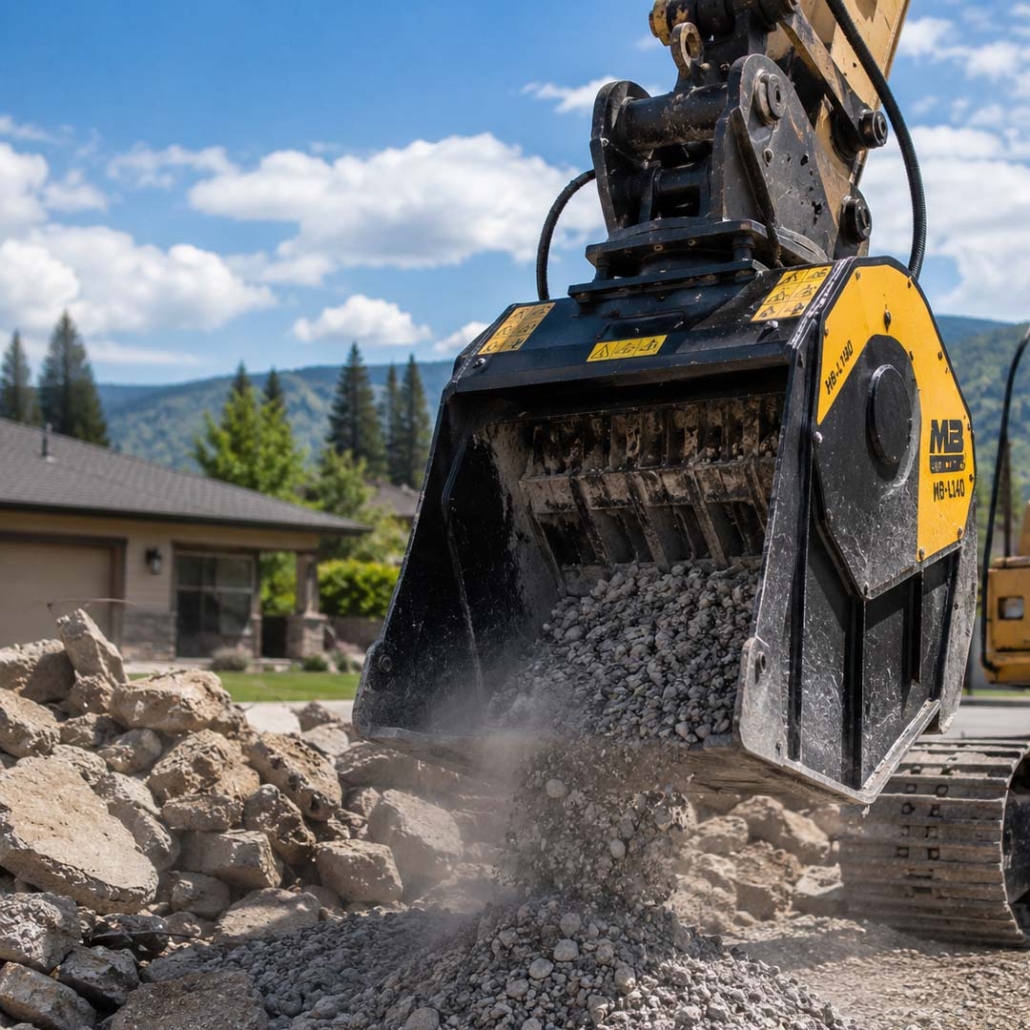
Something new is on its way to Fuller’s Concrete!

We’ve invested in specialized Italian-made crushing equipment that will give our team the ability to process suitable concrete, rock and other inert material directly at certain job sites.

For homeowners, builders and contractors throughout Kelowna and the Okanagan, this adds an entirely new option when dealing with concrete removal, demolition, excavation and site preparation.

Instead of looking at old concrete or excavated material simply as something that needs to be hauled away, we may now be able to process suitable material right where the work is taking place.

What Is Mobile Concrete Crushing?

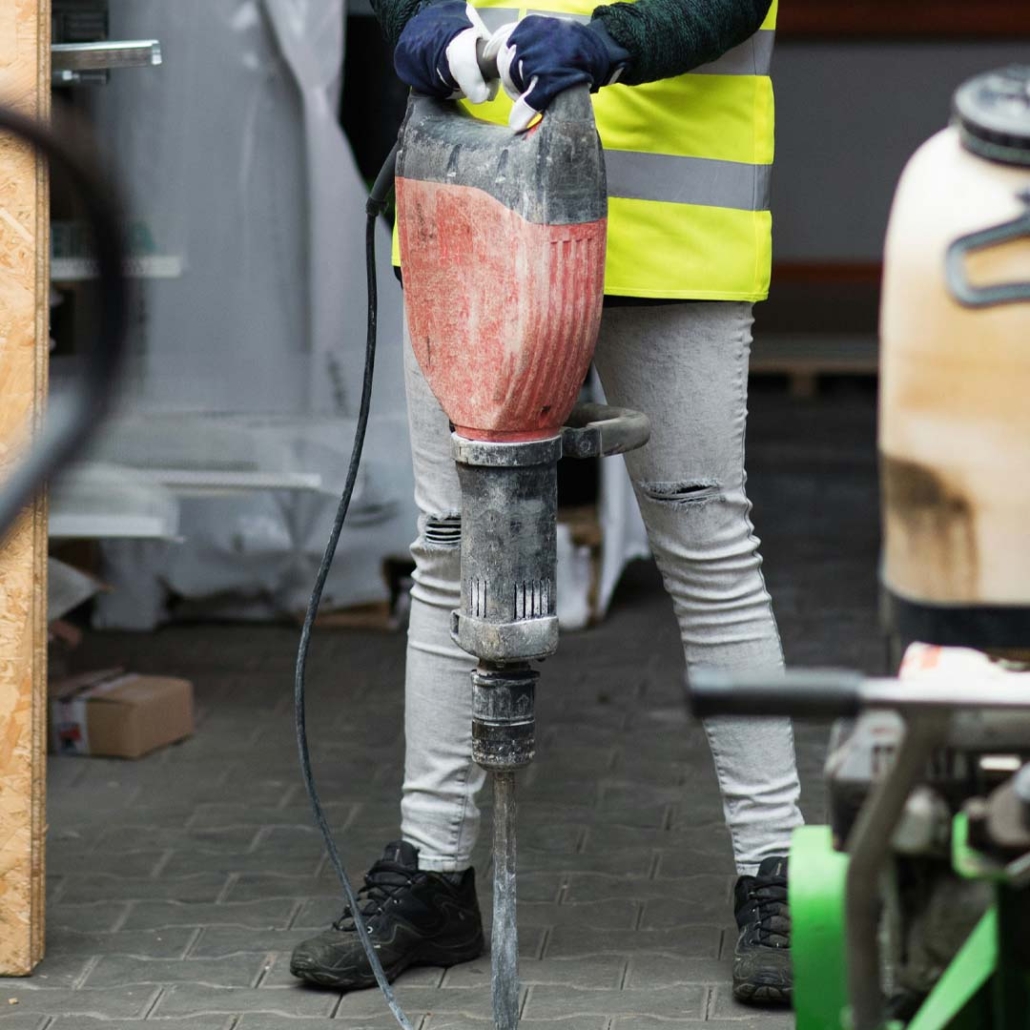
Traditional concrete removal often involves breaking up an existing driveway, patio, slab or other structure, loading the material into trucks and transporting it away from the property.

Depending on what comes next, aggregate or other base material may then need to be delivered back to the site.

Mobile crushing introduces another possibility.

Our new crusher attachment is designed to process suitable material directly at the work site. This can turn larger pieces of concrete or rock into smaller aggregate without requiring a large stationary crushing operation.

For some projects, that could mean less material needs to leave the property and less new material needs to be brought back in.

If you’re considering replacing existing concrete, our article on when concrete should be repaired versus replaced can help you determine when removal may be the better option.

Why On-Site Crushing Matters in the Okanagan

mobile concrete crushing company in kelowna

Okanagan construction sites can present some interesting challenges.

Properties may be steep, rocky or difficult for large trucks to access. Established neighbourhoods can have limited space for equipment, while rural properties may generate significant quantities of rock during excavation.

Reducing unnecessary material handling can make a considerable difference on these types of projects.

Our new crushing capability may be particularly useful for:

  • Concrete driveway removal
  • Patio and walkway demolition
  • Old concrete slabs
  • Suitable concrete construction debris
  • Excavated rock
  • Site preparation
  • Renovation and redevelopment projects
  • Larger residential and commercial properties

Before any concrete project begins, proper excavation and base preparation remain critical. You can learn more in Preparing Your Property for Concrete Work in the Okanagan Climate.

Can Crushed Concrete Be Reused?

In some circumstances, processed concrete can be reused as aggregate or fill rather than being treated entirely as waste.

However, this does not mean everything we crush automatically goes underneath new concrete or becomes structural base material.

The appropriate use depends on the material itself, the project specifications and, where applicable, engineering requirements.

For Fuller’s, the advantage is having another option available. We can evaluate the material and the project before determining whether on-site processing and reuse make sense.

Proper preparation is particularly important because many of the problems that eventually appear in finished concrete actually begin underneath it. We discuss some of those issues in What Causes Concrete Cracks in the Okanagan Climate?.

More Than a New Piece of Equipment

We’re not just excited about adding another machine to our fleet.

It’s what the equipment allows us to do!

Fuller’s already works across concrete construction, excavation, landscaping and retaining wall construction. Adding mobile crushing means we can potentially handle another stage of the project ourselves while also offering crushing as a service for other Okanagan contractors and property owners.

That could be particularly valuable on projects where concrete removal, excavation and new construction are happening on the same property.

A New Service for Okanagan Contractors

We also see significant potential for this equipment beyond our own projects.

Once operational, mobile crushing may be available as a standalone service for local:

  • Excavation contractors
  • Builders
  • Concrete contractors
  • Landscapers
  • Demolition contractors
  • Developers
  • Property owners

If you regularly encounter concrete or rock that needs to be removed from a site, we’d be interested in hearing about the type of work you’re doing.

Coming Soon to Kelowna and the Okanagan

The equipment is currently on its way from Italy, and we’ll share more about the service once it arrives and we’ve put it to work.

It’s an exciting addition for Fuller’s and another way we’re investing in equipment that allows us to take on challenging Okanagan projects.

Have a concrete, excavation or demolition project coming up?

Contact Fuller’s Concrete to tell us about the project and find out whether our new mobile crushing service could be a fit.

Choosing between a concrete patio and paving stones is one of the most common decisions homeowners face when planning outdoor upgrades in Kelowna and throughout the Okanagan. Both options can create attractive and functional outdoor spaces, but each comes with different long-term considerations related to durability, maintenance, cost, and climate performance.

Understanding how these materials perform in Okanagan conditions helps homeowners make better long-term investments.

pavers vs concrete

Why Climate Matters in the Okanagan

Outdoor surfaces in Kelowna are exposed to:

  • Freeze and thaw cycles
  • Intense summer heat
  • Snow removal and de-icing products
  • Soil movement on sloped properties

These conditions affect how patio materials age over time.

Benefits of Concrete Patios

Concrete patios remain one of the most popular options for Okanagan homeowners because they offer:

  • Long-term durability
  • Lower maintenance requirements
  • Clean and modern appearance
  • Cost-effective installation for larger areas

Modern finishing techniques also allow for:

  • Decorative concrete finishes
  • Exposed aggregate
  • Broom finishes
  • Stamped concrete textures

Concrete works especially well for contemporary outdoor living spaces.

Benefits of Paving Stones

Paving stones offer flexibility and design variety.

Benefits include:

  • Easier spot repairs
  • Wide selection of colors and patterns
  • Traditional aesthetic appeal
  • Flexibility in curved layouts

However, paving stone installations require proper base preparation to prevent shifting and settling over time.

Maintenance Differences

Concrete typically requires:

  • Occasional cleaning
  • Joint sealing in some applications

Paving stones may require:

  • Weed control between joints
  • Re-leveling over time
  • Joint sand replacement

Long-term maintenance expectations should be considered before choosing materials.

Slope and Drainage Considerations

Many Kelowna properties include hillsides and grade changes that affect patio construction.

Some projects require retaining wall systems for sloped outdoor spaces before patio installation can begin safely and properly.

Drainage planning is critical regardless of the surface material selected.

Which Option Is Better for Your Property?

The right choice depends on:

  • Budget
  • Property slope
  • Desired appearance
  • Long-term maintenance expectations
  • Outdoor living goals

For many homeowners, concrete provides the best combination of durability and simplicity in the Okanagan climate. Get in touch to learn more or get a quote!

Frequently Asked Questions

Is concrete cheaper than paving stones in Kelowna?
Concrete is often more cost-effective for larger patio areas.

Do paving stones shift over time?
Without proper base preparation, they can settle or move.

Can decorative concrete crack?
All concrete may develop minor cracking over time, but proper installation minimizes risk.

Do patios require drainage planning?
Yes. Drainage is essential for long-term performance and surface stability.

Concrete cracking is one of the most common concerns homeowners have when installing driveways, patios, walkways, and slabs in Kelowna and throughout the Okanagan. While some minor cracking can occur naturally over time, larger or premature cracks are often caused by improper preparation, drainage issues, or environmental stress.

Understanding why concrete cracks helps homeowners and builders protect long-term performance and appearance.

causes of concrete cracking

Freeze and Thaw Cycles

The Okanagan climate experiences significant temperature swings throughout the year. Water can enter small surface openings, freeze during colder temperatures, and expand.

Over time, this freeze-thaw process places stress on the concrete and can lead to cracking if the installation was not properly prepared.

Poor Base Preparation

Concrete is only as stable as the base underneath it.

Improper compaction or unstable soil conditions may lead to:

  • Settling
  • Surface movement
  • Uneven stress distribution

This is especially important on hillside and fill-area properties common throughout Kelowna and West Kelowna.

Drainage Problems

Water is one of the biggest threats to concrete durability.

Without proper grading and runoff control:

  • Water may pool beneath slabs
  • Soil erosion may occur
  • Freeze-thaw damage increases

Some properties require retaining walls and structural grading solutions to properly manage drainage before concrete work begins.

Lack of Control Joints

Control joints help guide natural concrete movement and reduce visible cracking.

Without properly spaced joints, stress can build unpredictably across the slab surface.

Heavy Loads and Thickness Issues

Concrete surfaces must be designed for their intended use.

Driveways and pads supporting:

  • RVs
  • Boats
  • Heavy vehicles
  • Equipment

may require additional reinforcement and thickness specifications.

Can Concrete Cracking Be Prevented Completely?

No concrete surface is completely immune to minor cracking over time. However, professional installation, proper drainage, base preparation, and climate-aware construction methods significantly reduce the likelihood of serious problems.

Why Proper Installation Matters

Long-lasting concrete depends on:

  • Excavation quality
  • Compaction
  • Drainage planning
  • Reinforcement
  • Proper curing conditions

Shortcuts during preparation often create expensive issues later.

Get in touch for a free quote or to learn more!

Frequently Asked Questions

Is some concrete cracking normal?
Minor surface cracking can occur naturally over time, especially in changing climates.

Does cold weather damage concrete?
Improper curing during cold weather can weaken concrete performance.

Can drainage problems crack concrete?
Yes. Poor drainage is one of the leading causes of shifting and cracking.

Should concrete be sealed in the Okanagan?
Sealing can help protect surfaces from moisture and environmental exposure.

Proper preparation is the most important step in ensuring long-lasting concrete work in Kelowna and the Okanagan. Before concrete is poured, the site must be excavated, graded, compacted, and assessed for drainage.

Rushing preparation often leads to cracking, settling, and premature failure.

Step 1: Site Evaluation and Excavation

Preparation begins with:

  • Removing unstable soil
  • Establishing proper grade
  • Ensuring adequate depth

Sloped properties may require coordination with engineered retaining wall systems before concrete installation begins.

Step 2: Base Preparation and Compaction

Preparing Your Property for Concrete Work in the Okanagan Climate

Concrete is only as strong as the base beneath it.

This includes:

  • Compacted granular material
  • Moisture control
  • Proper slope for drainage

In the Okanagan’s mixed soil conditions, this step is critical.

Step 3: Weather Considerations

Concrete installation must account for:

  • Temperature fluctuations
  • Early spring frost risk
  • Summer heat curing conditions

Proper timing improves durability.

Step 4: Access and Equipment Planning

Hillside and narrow-lot properties may require:

  • Specialized equipment
  • Concrete pumping
  • Additional staging preparation

Planning ahead reduces installation delays.

Common Mistakes to Avoid

  • Pouring without proper compaction
  • Ignoring drainage
  • Skipping expansion joints
  • Underestimating cure time

Concrete work is permanent — preparation determines performance.

Frequently Asked Questions

How long should the base be compacted before pouring concrete?
Compaction should meet industry standards and be verified before pouring.

Can concrete be poured in cold weather?
Yes, but precautions must be taken to protect curing.

Does slope affect concrete durability?
Yes, improper drainage increases risk of cracking.

Should retaining walls be installed before concrete?
Yes, structural walls typically come first in phased projects.

In the Okanagan’s freeze–thaw climate, concrete consistently outperforms asphalt in terms of durability, lifespan, and long-term value.

While asphalt may have a lower upfront cost, concrete often proves to be the more economical option over time, particularly for homeowners and builders focused on longevity.

How the Okanagan Climate Affects Hard Surfaces

Key environmental factors include:

  • Freeze–thaw cycles
  • Summer heat extremes
  • Snow removal and de-icing practices

These conditions cause asphalt to soften, crack, and degrade more quickly than concrete.

Lifespan Comparison

  • Asphalt driveways: typically 15–20 years
  • Concrete surfaces: often 30+ years with proper installation

Concrete’s rigidity and strength make it better suited for Okanagan conditions.

concrete or asphalt driveway pathway

Maintenance Requirements

Asphalt requires:

  • Regular sealing
  • More frequent repairs

Concrete requires:

  • Minimal maintenance
  • Occasional cleaning or sealing

Over time, maintenance costs can narrow or eliminate the initial price difference.

Best Uses for Concrete in Residential Projects

Concrete performs exceptionally well for:

  • Driveways
  • Walkways
  • Patios
  • Pads for structures

In projects involving grade changes or slopes, concrete often works alongside structural retaining wall systems to ensure long-term stability.

Builder Considerations

Builders often choose concrete because it:

  • Meets structural and load requirements
  • Performs well under inspection
  • Integrates cleanly with foundations and walls

Get in touch with us to learn more!

Frequently Asked Questions

Is concrete more expensive than asphalt in Kelowna?
Upfront, yes, but long-term costs are often lower.

Does concrete crack in cold weather?
Properly installed concrete is designed to handle freeze–thaw cycles.

How long before concrete can be used?
Most concrete is ready for light use within days, with full curing over time.

Is concrete suitable for sloped properties?
Yes, when properly designed and supported.

This past year was a busy one for concrete projects in the Okanagan. Homeowners focused on improving outdoor spaces, replacing old surfaces, and upgrading areas that had worn down over time. As a trusted concrete contractor Kelowna, we saw steady demand for projects like patios, walkways, and custom hardscape features. Many people wanted long-lasting surfaces that could handle the Okanagan weather while still looking great.

Our Job as a Concrete Contractor Kelowna in 2025

concrete slab preparation in kelowna

The year started with a strong push toward repairs. Winter concrete damage from the year before left many pathways with cracks and sinking sections. The spring thaw made these issues more visible. This led to a rise in calls for concrete removal and replacement. Homeowners learned that patching a failing slab often does not fix the problem. A full replacement gives better results, and it lasts longer. As a result, more people chose to remove old concrete and start fresh.

Summer brought another trend. Many residents wanted to add concrete outdoor living areas to their homes. Patios became one of the most common projects of the year. People wanted simple, smooth finishes that were easy to maintain. Some asked for textured surfaces for more grip. Others wanted clean broom finishes for a classic look. No matter the style, the goal was the same. Homeowners wanted a space that felt welcoming and could handle daily use.

Decorative work also grew in popularity in 2025. Stamped and stained concrete became a way to get a custom look without the cost of expensive materials. This helped homeowners create patios and walkways that matched the rest of their landscape design. Concrete borders, steps, and small retaining features were added to tie everything together.

Overall, 2025 was a great year of helping homeowners understand what makes a slab last. Educating about preparation, drainage, rebar, and curing time ensured that projects went smoothly. 

Contact us About Concrete in Kelowna!

All About Demolishing Concrete Kelowna BC

Looking back, 2025 showed how important skilled workmanship is. Concrete can last for decades when it is poured correctly. As we move into 2026, more homeowners are planning upgrades, replacements, and new hardscape projects. A trusted concrete contractor Kelowna, will continue to play a key role in building strong, beautiful outdoor spaces that stand the test of time. Contact us today to book your project for the new year!

FAQ

concrete-projects-company-in-kelowna-bc

1. How do I choose the right concrete contractor in Kelowna?

Pick a contractor with local experience. Ask for past project photos. Make sure they offer clear quotes. Good communication matters. A trusted contractor will guide you through each step.

2. How long does a concrete project usually take?

Most small jobs finish in a few days. Larger projects can take a week or more. Concrete also needs time to cure. Your contractor will explain the timeline so you know what to expect.

3. Can concrete work be done in winter in Kelowna?

Yes, but conditions must be right. Cold weather needs extra care. Contractors use covers and heating methods to protect fresh concrete. A skilled team will tell you if winter pouring is safe for your project.

Concrete is one of the most durable and flexible materials for outdoor projects. Driveways, patios, and walkways all benefit from its strength. But in Kelowna, concrete also needs to withstand hot summers and freezing winters. Choosing the right Kelowna concrete companies ensures your project looks great and lasts for years.

Why Choose Concrete?

Concrete is popular because it’s tough and low-maintenance. Unlike wood, it won’t rot, and unlike gravel, it won’t shift. With proper installation, a concrete surface can last 25 to 30 years. It’s also more customizable than many people realize.

Stamped concrete can mimic stone, brick, or even wood planks. Exposed aggregate shows off natural stone textures, while stained concrete can bring colour to the exterior of your home. These finishes mean your driveway or patio can be durable and suit the aesthetic of your residence.

Importance of Installation and Maintenance

premium concrete sealer to use on concrete in kelowna

Concrete work may seem like a simple job, but quality depends on the prep work. A proper base layer, grading, and reinforcement keep cracks at bay. In Kelowna, the freeze-thaw cycle makes base preparation critical. Without it, surfaces can heave or break apart.

That’s why working with experienced Kelowna concrete companies matters. Pros know how to prepare the site and ensure an even pour. They’re also familiar with local conditions and use mixes suited to the Okanagan climate.

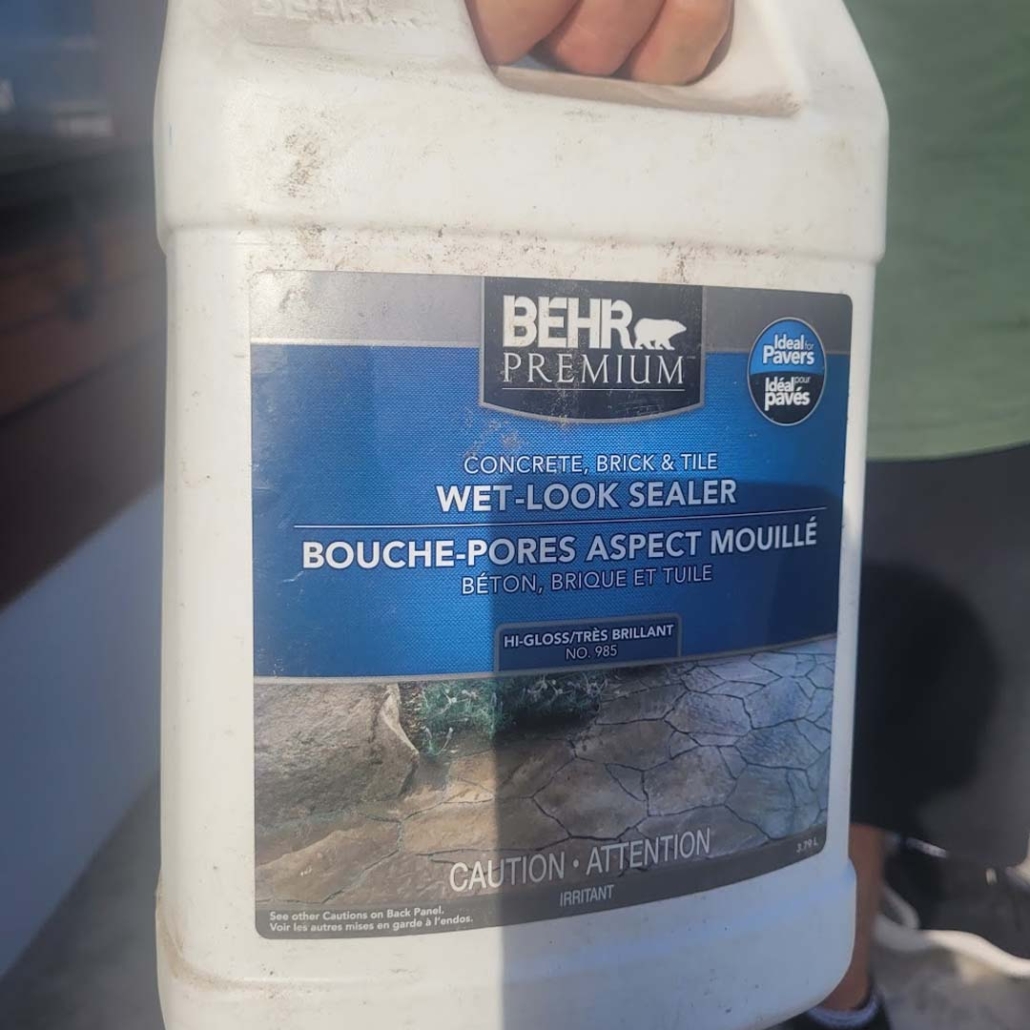
Concrete doesn’t need much upkeep, but a little care goes a long way. Sealing every two to three years helps prevent water damage and staining. Cleaning with a garden hose or mild soap keeps surfaces looking new. Avoid using harsh chemicals or salt for ice, since both can cause damage. Instead, use sand or pet-safe de-icers in winter.

For cracks or chips, repair early before the damage spreads. Small patches are easy to fix, but waiting can mean replacing larger sections later.

Contact Kelowna Concrete Companies

From driveways to patios, we create concrete work that stands the test of time. Our team handles every detail, from design to finishing, with quality you can trust. Contact us today to learn more about our services. Visit our social media for photos of past concrete projects across Kelowna.

FAQ About Kelowna Concrete Companies

How soon can I use new concrete?

Light foot traffic is usually fine after 48 hours, while vehicles should wait at least a week.

Do I need to seal concrete?

Yes. Sealing helps protect against moisture, stains, and UV damage.

What is stamped concrete?

It’s regular concrete pressed with patterns to look like stone, tile, or brick.