
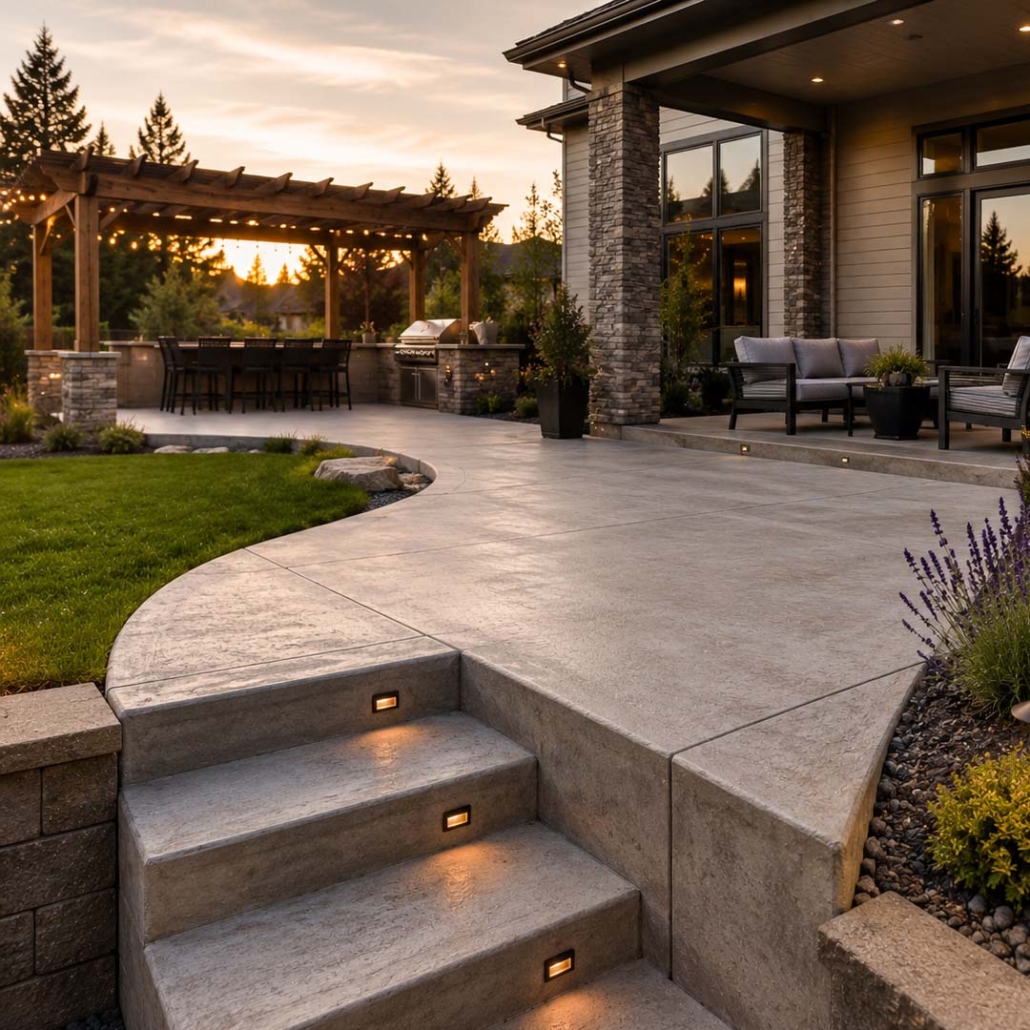
Summer is one of the busiest seasons for concrete construction throughout the Okanagan. Whether you’re thinking about replacing an aging driveway, installing a new patio or adding sidewalks around your property, proper planning before construction begins can make the difference between a project that lasts for decades and one that develops problems far sooner than expected.
Concrete is often viewed as one of the most durable building materials available, but its long-term performance depends just as much on what happens beneath the surface as the concrete itself. Soil conditions, drainage, site preparation and proper installation all play critical roles in how well your investment stands up to Okanagan weather.
Summer Is the Perfect Time to Plan Ahead
Many homeowners assume that concrete projects should begin as soon as possible once warm weather arrives. While summer provides excellent conditions for construction, it’s also the ideal time to evaluate how your property performs.
Heavy spring runoff may have revealed drainage issues, while the hot summer months often expose low spots where water collects, uneven walkways or areas where existing concrete has begun to settle or crack.
Taking the time to identify these issues before construction begins allows them to be corrected properly rather than simply pouring new concrete over existing problems.
A Strong Foundation Starts Below Ground
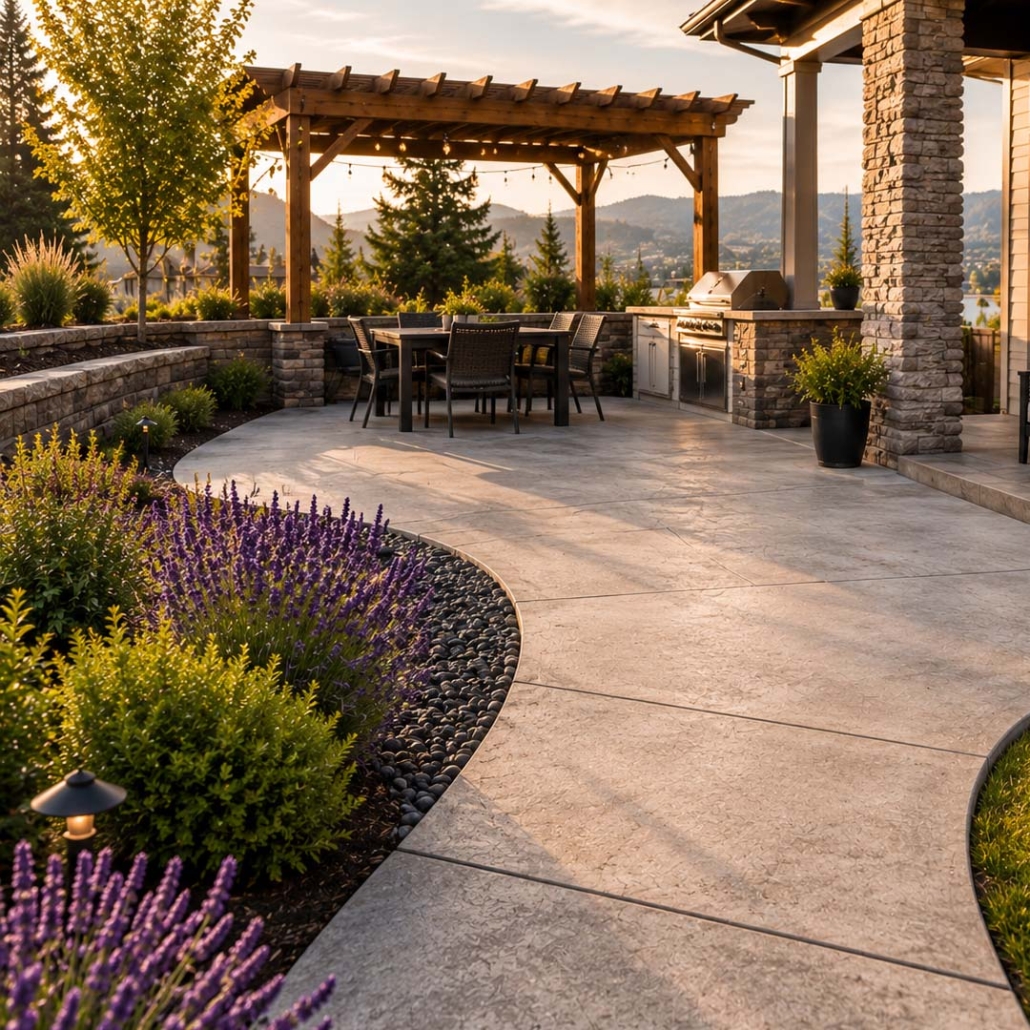
One of the biggest misconceptions about concrete is that strength comes from the slab itself. In reality, the long-term durability of any concrete project depends heavily on proper excavation, grading and base preparation.
Without a properly compacted base, even professionally finished concrete can settle unevenly over time.
If you’d like to understand more about what’s involved before concrete is poured, read Preparing Your Property for Concrete Work in the Okanagan Climate.
Drainage Is Just as Important as the Concrete
Concrete naturally sheds water, but that water needs somewhere to go.
Poor drainage can contribute to erosion beneath slabs, water pooling near foundations and premature deterioration during the Okanagan’s freeze-thaw cycles.
Every project should consider:
- Surface grading
- Downspout discharge
- Adjacent landscaping
- Existing irrigation
- Future drainage patterns
Many drainage issues can be corrected during construction, saving considerably more expensive repairs later.
Think About the Entire Outdoor Space
A concrete patio rarely exists on its own.
Many successful projects also include:
- Landscape lighting
- Irrigation upgrades
- Garden beds
- Outdoor kitchens
- Seating areas
- Professional Landscaping
- Retaining Wall Construction where elevation changes require structural support
Planning these improvements together creates a more cohesive outdoor space while reducing future disruption.
Don’t Automatically Replace Existing Concrete
Not every crack means replacement is necessary.
Minor surface cracking is common as concrete ages and doesn’t always indicate structural failure. However, large settlement cracks, significant heaving or drainage-related movement often point to more serious underlying issues.
Understanding the difference can help homeowners make informed decisions about repair versus replacement.
Our article What Causes Concrete Cracks in the Okanagan Climate? explains why cracks develop and what they may indicate.
Consider How You’ll Use the Space
Concrete should support the way you actually live.
Will children be playing basketball?
Will you entertain frequently?
Are you planning to add a hot tub?
Do you need additional parking?
These decisions influence slab thickness, reinforcement, layout and long-term functionality.
Designing for future needs often costs very little during construction but can save substantial money if plans change later.
Book Before the Fall Rush
Every year, many homeowners decide in late August that they’d like to complete outdoor improvements before winter.
Unfortunately, this is also when contractor schedules become increasingly full.
Planning your project during the summer gives you more flexibility, allows adequate time for design and helps ensure construction can be completed before colder weather arrives.
Invest in Preparation, Not Just Concrete
Concrete is one of the most durable investments you can make in your property, but only when it’s supported by proper planning and construction.
Choosing experienced contractors, preparing the site correctly and considering how your entire landscape works together will produce results that continue performing for many years.
Whether you’re installing a new driveway, patio, sidewalk or outdoor living space, Fuller’s Concrete works with homeowners throughout Kelowna and the Okanagan to deliver projects built for local conditions. Contact us today to schedule a site consultation and start planning your next project.
Frequently Asked Questions
When is the best time to pour concrete in the Okanagan?
Late spring through early fall generally provides ideal conditions, although scheduling depends on weather and project requirements.
Why is site preparation so important?
A properly prepared base reduces settlement, improves drainage and significantly extends the life of your concrete.
Can cracked concrete always be repaired?
Not always. Some cracks are cosmetic, while others indicate underlying movement that may require replacement.
Should landscaping be completed before or after concrete?
It depends on the project, but concrete, retaining walls and landscaping are often best planned together to improve efficiency and ensure proper grading.

